One of the most common mistakes in punctuation, especially on the web, is the incorrect use of hyphens. In other words, hyphens that should be dashes.
To those with a good grasp of punctuation and grammar, this error is on par with an apostrophe that shouldn’t be there (how embarrassing for us so-called expert’s!)
Some examples of incorrect hyphens and dashes:
- ‘See our Strategic Plan 2018-2022’
- ‘There’s a reason – and that reason is money.’
- ‘Give us some time–we are only human.’
Why are these wrong? We’ll come to that shortly. First we need to a) establish what kind of dashes we are using and b) understand the function of hyphens vs dashes.
En dash is king
On the La Trobe website, we use the ‘en dash’ (–), not the longer ‘em dash’ (—). This is mostly just a matter of style. Em dashes can sometimes serve a specific function, but we LTU web editors need not worry about that. En dashes serve all of our website needs just fine.
So, when we say ‘dash’ here, we mean ‘en dash’ (–). Which is still longer than a hyphen.
What’s the difference between a dash and a hyphen?
Not much, in terms of actual ink on the page (or pixels on the screen). In fact, sometimes it’s hard to tell the difference between them at all, depending on the font that’s being used. With the La Trobe University fonts, whether in print or on the website, it’s fairly easy to tell the difference. A dash is slightly longer.
If the difference is so small, why does it matter if we get them wrong?
The short answer is: because we’re a university! A world-class one at that. These two kinds of punctuation have quite different functions and it’s important for us to get them right. We’re in the education game, after all. And our reputation is at stake!
Where should I use a dash (–) instead of a hyphen (-)?
1. To link parts of sentences
Dashes are perhaps most commonly used within a sentence – to break the sentence up (like I’ve just done with this one), where a comma, semicolon or full stop simply won’t do.
Dashes can also be used as parenthesis – as brackets, in other words – as I’ve done here.
2. To link certain words or numbers
This is where it gets a bit trickier. Here are a few correct examples:
- Collingwood–Essendon match (dash)
- Far-out journey (hyphen)
- Pages 4–5 (dash)
- Re-prioritise (hyphen)
- Strategic Plan 2018–22 (dash)
Why are some of these dashes and some of these hyphens? It’s all explained in the Editorial Style Guide (pages 14 and 16). Which all of you web editors out there have no doubt read cover to cover. If you haven’t, please do (Like we said, reputation…)
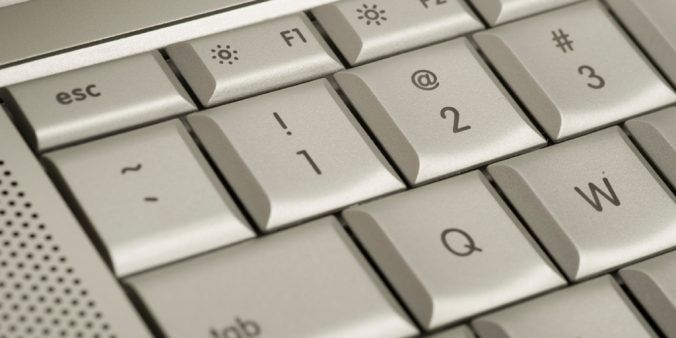
How do I type a dash on a keyboard?
On a Mac, it’s really easy. Just hold down OPTION and hit the hyphen key.
On a PC, there’s a bit of a trick to it. Hold the ALT key and type 0150 on the numerical keypad.
The PC method may sound complicated, but you’d be surprised how easy it is for this to become second nature (muscle memory is a powerful thing). The best thing about this method is that it will work in any text interface, not just in Word. So it’s great for us CMS wizards who are regularly making changes to web pages. And it’s certainly better than copying and pasting a dash from somewhere else (don’t even think about touching that mouse).
A couple of tips
Beware overuse. There’s nothing worse than a paragraph full of dashes (even when they are actually correctly dashes and not hyphens). Use dashes sparingly.
Whatever you do, don’t make it a hyphen when it should be a dash!
Have questions about your web editing?
Remember, we’re always here to help! To reach out, please: